Backed by Science
Discover our expert teams and the impactful results of their research.
Scroll down to discover more
Study on the Effects of Anions
in the Human body
At Biow, we believe in the transformative power of negatively charged ions to enhance your well-being. Backing this belief is a groundbreaking joint study conducted by the University of Exeter, College of Life and Environmental Sciences, in collaboration with the Austrian IMSB High-Performance Center, the University of Applied Sciences in Kufstein Tirol, and the Technical University of Wien.
The study reveals that exposure to negatively charged ions may enhance cardio-respiratory function, boost aerobic metabolism, and support recovery following exercise.
Longevity and well-being
as a life goal
In 2012, we began our journey into understanding the role of breathing in supporting cellular functions and managing oxidative stress. Our research revealed the potential to positively influence the body’s natural recovery processes—helping to support energy levels, aid in regeneration, and enhance overall well-being.
Advanced Technology Rooted in Science
From day one, our commitment to scientific accuracy
has fuelled our innovation. Our initial model underwent
rigorous testing, producing outstanding results, and our
technology has since been integrated into a range of
professional settings.
Optimised Energy Support for Everyone
Scientific Collaborations and Trusted Results
We’re proud to collaborate with leading research institutions such as the University of Oviedo (UNIOVI) and the Health Research Institute of the Principality of Asturias (ISPA). Under the leadership of Dr. Ana Coto, the cROS research group has validated that Biow helps create an environment that supports cellular activity, mitochondrial function, protein synthesis, and antioxidant support.
Key Findings of the study:
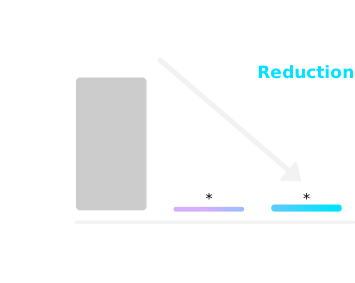
Increase in cellular energy production
Decrease in free radical
generation
Click here to access to an article about this study published at FRONTIERS magazine
Biow’s Support for Better Sleep
Read the Study carried out in collaboration with the Clínica Universidad de Murcia
In collaboration with UCAM Catholic University of Murcia, Biow has shown its potential to support breathing and sleep quality. By promoting healthy lung function and cellular efficiency, Biow’s biologically active anions contribute to improved air quality and help create an environment that supports restful sleep.
Study Highlights:
100%
79%
They reduce the time it takes for them to fall asleep.
70%
66%
UCAM-BIOW Chair
in Advanced Regenerative Medicine
The Catholic University of Murcia (UCAM) is leading research in cellular regeneration and exploring Biow’s potential effects on health and aging. Researchers Rubén Rabadán and Rubén Zapata, working in Dr. Juan Carlos Izpisúa Belmonte’s laboratory at UCAM HiTech, have studied Biow’s impact, indicating its potential to support cellular and tissue regeneration, promote healthy metabolic function, and enhance overall well-being.
This team has shown that Biow improves multiple parameters associated with aging :
– Possitive impact on cellular and tissue regeneration
– Reduces lipoperoxidation in the liver.
– Boosts cellular energy in the brain and muscles.
– Metabolic rejuvenation and reduced inflamation.
For further information download a report of this study here
Liver lipoperoxidation
Cellular energy in the brain
Cellular energy in the muscles
These combined effects of the Biow in reducing free radical damage, increasing ATP (energy) production in the brain, and improving muscle energy capacity suggest a potential positive impact on cellular and tissue regeneration, pointing towards the promotion of an environment more conducive to tissue recovery and regeneration in the body.
Liver LPO
Lipoperoxidation is a biochemical process in which lipids present in cell membranes are attacked by free radicals, resulting in the oxidation of these lipids. This can lead to cell dysfunction and a host of health problems, as cell membranes are critical to the integrity and proper functioning of cells.
Graphic legend: Young control mice (CON), young mice with BioW (BIOW), elderly control mice (AG CON), elderly mice with BioW (AG BIOW).
What we see in the graph is that Biow exerts a reduction of lipid damage by free radicals in young and old individuals.
Detailed explanation of the charts:
Young liver
Aged liver
- A significant reduction in lipid damage from free radicals is observed in young and elderly individuals treated with BioW compared to those who did not receive the treatment (CON vs BIOW and AG vs AG BIOW).
- This reduction in lipid damage is especially noticeable in the liver, which is the organ responsible for detoxification in the human body.
- Although the results suggest a beneficial role, the exact mechanism behind this reduction is unclear. It is suggested that it could be due to an increase in the individual’s antioxidant defence or a direct action from the device.
- It is noted that the antioxidant capacity of the individuals’ livers did not change during the study, suggesting that the reduction in lipoperoxidation observed is solely due to the direct action of the device.
ATP Muscle (aged)
ATP is a crucial molecule for energy storage and transfer in cells.
The data obtained in the study of the ATP production capacity in the muscle of elderly mice have shown that the ion inducer developed within the BioW equipment is sufficient to significantly increase the energy capacity in elderly.
This graph highlights the relevance of maintaining mitochondrial capacity to maintain muscle activity in the lower limbs, which contributes significantly to delaying dependence in older people. It is highlighted that the equipment used in this research not only has a specific effect, but also affects the body as a whole. The relationship between fatigue in the elderly and the decrease in lung and cardiac capacity is highlighted, which impacts the uptake of muscle oxygen and the appearance of dependence. It is suggested that the observed improvement in ATP production in elderly muscles could be related to systemic improvement, including a possible influence of reduced environmental pollution. These results are critical to promoting healthy aging by reducing fatigue and preserving muscle mass, crucial aspects of maintaining independence in old age.
Impact of BioW Use on Metabolic and Molecular Markers in Elderly Mice:
Evidence for Metabolic Rejuvenation and Reduced Inflammation
Glucose
Glucose-6P
Citric Acid
Ribose-5P
Hexose-6P
Glycerol-3P
Blood analysis of the mice showed a decrease in the levels of several components related to important metabolic processes, such as glycolysis, the pentose phosphate pathway, the Krebs cycle, and triglyceride biosynthesis (all of which are closely linked to energy production and storage).
These reduced levels resembled those found in young mice, as opposed to untreated elderly mice, which maintained higher levels. In addition, changes in molecular markers were detected in the blood. For example, phenylalanine, an amino acid associated with heart damage in old age, decreased after exposure to Biow in elderly mice, reaching levels similar to those in young mice. On the other hand, carnitine C:5, which facilitates the transport of fatty acids in the mitochondria, recovered after use of Biow, as did kinurenic acid, an inflammatory mediator associated with aging.
KYNA
Phenylalanine
Carnitine C:5
In liver tissue, changes in metabolic markers were also observed. A tendency for increased ATP was detected in animals treated with Biow, as well as a decrease in levels of kinurenic acid, a marker of inflammation. A reduction in short-chain carnitines was observed in the treated animals, which is curious since previous studies had described an increase in these carnitines in the liver during aging. A reversal in hippuric acid levels, associated with frailty in old age, was also observed after treatment with Biow.
In addition, treatment with Biow produced a significant change in S-adenosylmethionine, an important metabolite for the synthesis of DNA, RNA, and proteins, the levels of which decline with age. Treatment with Biow restored levels of this metabolite to levels found in young mice.
Citric Acid
KYNA
Phenylalanine
ATP
Blood tests from aged mice showed that Biow reduced the levels of certain elements related to energy production in the body, making them look younger. We found similar changes in blood markers and in the liver, where we saw improvements in metabolic health and inflammation. The use of Biow also appears to have reversed some signs of aging in exposed mice, such as decreased metabolic energy, inflammation, frailty, and altered biomolecule synthesis, suggesting its potential to help maintain health as we age.
*Kanurenic acid (KYNA): inflammatory marker.
Liver LPO
ATP Brain (Aged)
ATP Muscle (Aged)
The use of BioW shows a beneficial effect in reducing lipid damage by free radicals, especially in the liver, due to the direct action of the device. A significant decrease in lipid damage is observed in young and elderly individuals treated with BioW compared to those not treated. This finding is relevant given the importance of the liver in the detoxification of the human body. In addition, the increase in energy capacity in the muscles of elderly mice suggests a comprehensive effect of BioW equipment in preserving muscle activity, promoting healthy aging and independence in old age.